







If you’ve ever told yourself, “I worked out today, so I can have the extra slice of pizza” — first of all, same. Second of all, we need to talk.
Whether you’re a Fulshear parent sprinting between soccer practice, school pickup, and a work deadline that refuses to move, or a professional whose “lunch break” is a protein bar eaten over a keyboard — chances are you’ve wondered which is more important for weight loss: eating better or exercising more. It’s the fitness version of “chicken or the egg,” and people have been arguing about it since before leggings were considered acceptable pants.
Here’s the good news: a massive overview of research — pooling findings from 32 separate scientific reviews — just gave us a cleaner answer than we’ve had before. And honestly, it’s one that this Exercise Physiologist with 30-plus years and over 30,000 training sessions under his belt has been preaching for a long time.
You need both. And when you do both, the results are in a different league entirely.
Why Picking Just One Is Like Playing With Half a Deck
The research looked at three different approaches to weight loss: diet only, exercise only, and diet combined with exercise. People with overweight or obesity were studied across multiple age groups — adults, kids, and older adults.
Across every single category, the group that combined dietary changes with regular physical activity came out ahead. We’re talking better weight loss, slimmer waistlines, lower blood sugar, improved cholesterol, better insulin sensitivity, and stronger cardiorespiratory fitness.
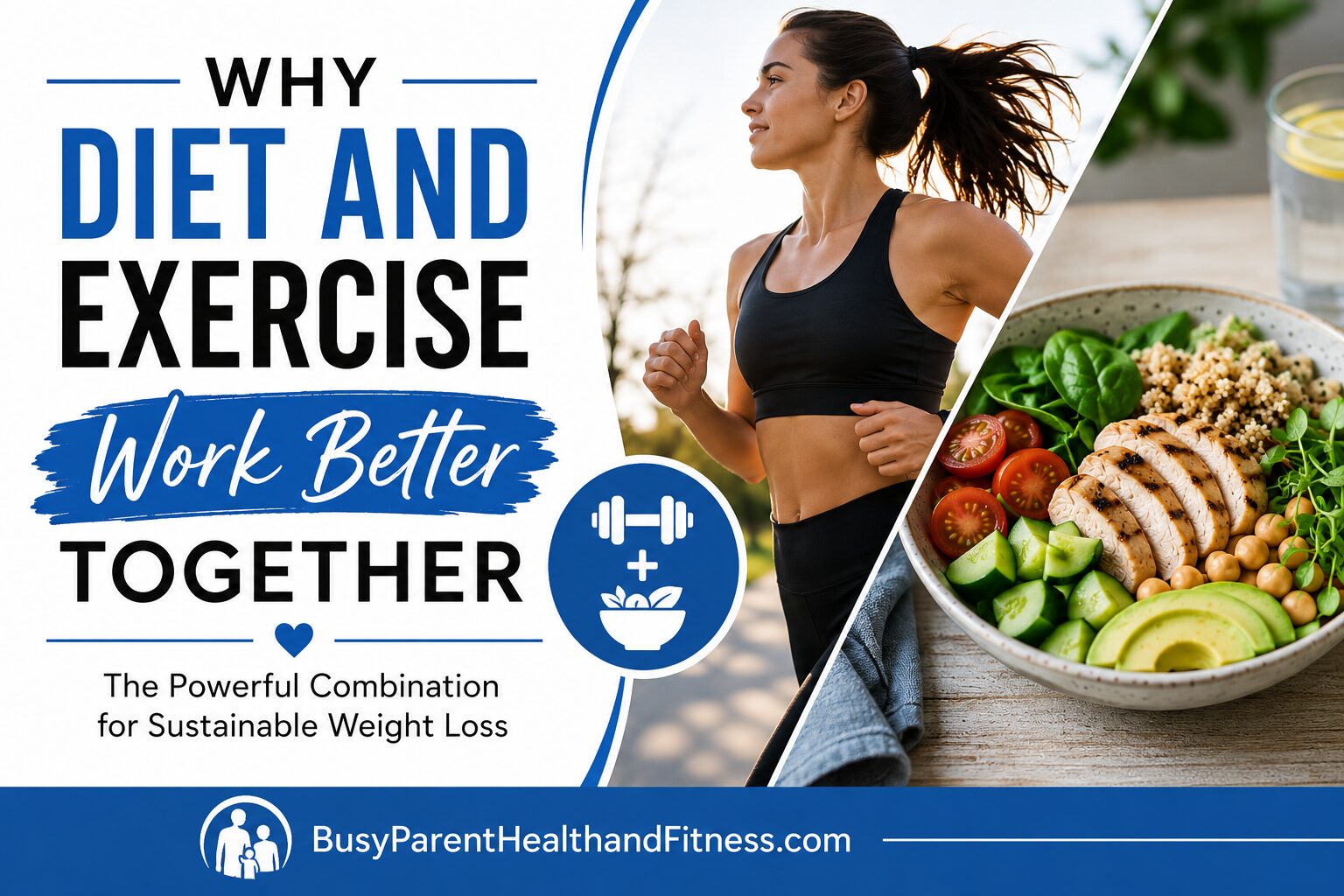
Diet alone? It helps. Exercise alone? It helps. But together? They don’t just add — they multiply.
Think of it like a two-person kayak. One person paddling will get you somewhere, eventually, while exhausting yourself. Two people paddling in sync? You’re gliding. And you get there with energy to spare.
You Don’t Have to Lose a Ton of Weight to Get Healthier
Here’s something that doesn’t get said enough, especially in a culture obsessed with the number on the scale: your metabolic health can improve even when the weight loss is modest.
The research showed that people who combined diet and exercise saw improvements in blood sugar regulation, insulin sensitivity, cholesterol levels, and inflammation — sometimes before they’d lost significant weight. In other words, the inside of your body starts winning even when the outside hasn’t caught up yet.
This is why I don’t let clients get too fixated on the scale. That number tells one small piece of a much bigger story. If your energy is up, your pants feel different, and you’re not crashing every afternoon — something good is happening, whether the scale shows it or not.
The Consistency Factor: How Long You Stick With It Matters
The most effective programs in the research had a few things in common, and one of the biggest was duration. Programs that ran six to twelve months consistently outperformed shorter efforts. Regular check-ins and structured support also made a significant difference — people were far more likely to stick with the changes when they had some form of accountability built in.
Sound familiar? It should. This is exactly why online coaching exists, and why having a plan — a real, written, structured plan — beats winging it every single time.
If you’re a parent who’s been saying “I’ll start Monday” since, I don’t know, 2019 — the research is telling you that starting matters less than sustaining. You need a program you can actually maintain, not one that makes you miserable for three weeks before you throw the whole thing out.
That’s exactly why I wrote Busy Parent Health & Fitness. It’s a four-week program built specifically for people who are time-starved, schedule-chaotic, and tired of fitness advice written for someone with three free hours and a personal chef. It combines movement and smarter eating habits in a way that fits into a real life — in Fulshear, or in your living room at 9pm if that’s what it takes.
What About Kids? The Family Angle Is Real
For families with children and teenagers, the research found that lifestyle programs combining diet and exercise did lead to improvements in BMI and health markers — but here’s the catch: those improvements started slipping once the structured support went away.
This tells us something important for Fulshear families: the environment matters. If the whole household is moving toward healthier habits, kids have a much better shot at keeping them. If Mom or Dad is eating one way and the kids are eating another, it’s an uphill battle for everyone.
The best thing you can do for your children’s health isn’t buying them a fitness tracker. It’s modeling what a healthy lifestyle looks like — and making it normal, not punitive. Healthy snacks that taste good, family walks that don’t feel like punishment, and meals that are both nutritious and something people actually want to eat.
Speaking of which — if mealtime in your house is currently a negotiation between chicken nuggets and chaos, check out Thin in the Kitchen. It’s full of recipes designed to be practical, not Pinterest-perfect, because the best meal is the one that actually gets made and eaten.
The Older Adults in the Room (Yes, This Means You Too)
For those of us who’ve been around a bit longer, the research adds an important wrinkle: muscle preservation becomes a priority.
When older adults combined diet and exercise — specifically resistance training — they didn’t just lose fat. They held onto lean muscle mass while doing it. This is a big deal because muscle is what keeps you strong, mobile, and metabolically active as you age. Losing it is much easier than rebuilding it, which is why strength training isn’t optional as you get older. It’s insurance.
If you’re in your 40s, 50s, or beyond and you’re doing nothing but cardio, I say this with all the professional kindness I can muster: please pick up something heavy. Regularly.
So What Does This Look Like in Real Life?
Here’s the practical translation for a busy Fulshear parent or professional:
Eat with intention, not perfection. You don’t need a spotless diet. You need one that has consistent structure — enough protein, enough vegetables, and not so many drive-through runs that your car learns the menu. Small, repeatable habits beat dramatic overhauls every time.
Move your body in ways that include resistance. Cardio is great. Cardio plus strength training is better. You don’t need a gym membership — bodyweight work counts, and a few resistance bands can cover a lot of ground. The goal is to build and protect muscle, not just burn calories.
Get some form of support or accountability. The research was clear on this: people who had structured check-ins and coaching stuck with their programs longer and got better results. Whether that’s a coach, a program, a workout partner, or a community, having something external to report to makes a measurable difference.
Plan for the long game. A twelve-week transformation sounds exciting, but what happens at week thirteen? Build habits that have a future. The goal isn’t to “finish” a fitness program. The goal is to build a lifestyle that doesn’t need to be restarted every few months.
The Plan That Ties It All Together
If you’re ready to stop choosing between diet OR exercise and start seeing what happens when you do both — my Busy Parent Health & Fitness ebook is the place to start. It’s built around real schedules, real limitations, and real results for busy people who live in the real world (population: all of us trying to get through the week).
You’ve got the research. You’ve got the tools. The only thing left is the decision.
And unlike the drive-through line at 6pm on a school night, this one doesn’t require you to wait very long.