








Let me guess. You started the year with all the motivation in the world. You had the gym membership, the new shoes, maybe even one of those fancy water bottles with the time markers on the side telling you to “keep going, champ.” And then… life happened. The kids needed something. Work got crazy. The couch called your name at 8 p.m. and honestly, it sounded more reasonable than a treadmill.
Sound familiar? If you’re a busy parent here in Fulshear — juggling carpool lines, soccer practices, deadlines, and everything in between — you’ve probably blamed yourself more than once for not being more disciplined. You’ve thought, “I just need more willpower.”
Here’s the thing: you don’t. And the science backs me up on that.
After more than 30 years working with clients as an Exercise Physiologist and Personal Trainer — logging well over 30,000 sessions — I can tell you that willpower is probably the most overrated concept in all of fitness. It burns out fast. What actually keeps people moving long-term has everything to do with how exercise feels, not how hard you can grit your teeth through it.
Your Brain Wants to Enjoy Things (Shocking, I Know)
Researchers who study physical activity and motivation have found something really interesting: the people who stick with exercise over the long haul aren’t necessarily the most disciplined. They’re the ones who actually enjoy what they’re doing. Not “enjoy” in a sarcastic “oh yes I love burpees” way — genuinely enjoy it.
When exercise is driven purely by external pressure — lose the baby weight, get your numbers down, your doctor told you to — it tends to feel like a punishment. And your brain, being the smart organ it is, keeps a running tab on punishments. After enough unpleasant experiences, it starts steering you away from the whole idea of working out before you even lace up your shoes.
On the flip side, when movement creates positive feelings — pride, energy, that “I actually feel pretty good right now” sensation — your brain files that away too. And it makes you want to come back.
Emotions like pride, genuine enjoyment, and what researchers call “attraction to physical activity” (basically, just wanting to move) turned out to be among the strongest predictors of whether someone actually plans to keep exercising. Stronger than guilt. Stronger than doctor’s orders. Stronger than that New Year’s resolution you posted on Facebook.
The “I Should” Trap That Kills Every Routine
Here in Fulshear, I see it all the time. Busy moms and dads who come to me and say, “I know I should be working out. I just can’t seem to make myself do it.”
The word “should” is a red flag. It tells me the exercise they’re imagining feels like a chore, not something they’d ever look forward to. And when something feels like a chore, your brain is already looking for the exit.
The research confirms it: people who exercise primarily for external reasons — appearance, weight management, social pressure — have a harder time maintaining it compared to people who exercise because it makes them feel capable, energized, or just plain good. External motivation is like a phone battery. It works great at first and then dies at the worst possible moment.
Intrinsic motivation — the kind that comes from actually enjoying what you’re doing or feeling proud of your progress — is more like a slow charger that keeps things topped off consistently. Boring? Maybe. Effective? Absolutely.
So What Does This Mean for You, Practically?
I’m not here to just wave research at you and wish you luck. Let me give you some real, actionable stuff — the same kind of guidance I’ve been sharing with clients for three decades and that I broke down in my Busy Parent Health & Fitness book.
1. Pick something you actually like doing. I know this sounds embarrassingly obvious, but you’d be surprised how many people torture themselves on machines they hate because they heard it burns the most calories. You know what burns zero calories? The workout you quit after two weeks. A walk around your neighborhood in the Fulshear evening air, a dance workout in your living room, a backyard circuit with your kids — these count. They more than count.
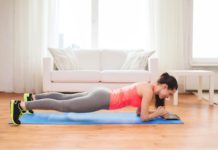
2. Set mastery goals, not just outcome goals. “Lose 20 pounds” is an outcome goal. It’s fine, but it’s slow to reward you and easy to feel defeated by. “Hold a plank for 10 more seconds than last week” is a mastery goal. It’s something you can feel good about today. Research consistently shows that wanting to improve at something is a powerful driver of sticking with it. Give yourself small wins to collect along the way.
3. Pay attention to how you feel during and after movement. Most of us go through workouts on autopilot, thinking about everything except the workout. Start noticing: Do you feel more energized after a morning walk? Do you feel proud after completing a challenging set? Those feelings are data. They’re your brain telling you what kind of movement it will actually support long-term.
4. Ditch the all-or-nothing mindset. I’ve said this a thousand times and I’ll say it a thousand more: a 20-minute workout is infinitely better than the zero-minute workout you skipped because you couldn’t do an hour. Shorter, consistent sessions that leave you feeling good build more momentum than the occasional epic session you dread and recover from for three days.
5. Find or create an environment where you feel comfortable. Negative experiences in fitness spaces stick with people. If you’ve ever felt self-conscious at a big gym, you know exactly what I mean. Whether that’s working out at home, finding a welcoming community gym, or exercising with a friend who doesn’t make you feel judged — environment matters more than most people realize. As busy Fulshear parents, you may find that home-based workouts are your best bet anyway, simply because of the time they save. (No commute, no waiting for equipment, no explaining to the kids why you’re leaving again.)
A Note to My Fulshear Families
You work hard, you juggle a ridiculous number of responsibilities, and you’re doing your best to take care of everyone else — often at the expense of taking care of yourself. I get it. I’ve been working with people exactly like you for my entire career.
But here’s what I want you to understand: fitness doesn’t have to be miserable to be effective. The best exercise program for a busy Fulshear parent isn’t the most punishing one — it’s the one that fits your life, that you can actually look forward to, and that leaves you feeling better than when you started.
That’s exactly the philosophy behind my Busy Parent Health & Fitness ebook — a 4-week fitness program built specifically for people whose schedules don’t leave room for two-hour gym sessions. It’s designed around reality: real time constraints, real energy levels, and real life here in the suburbs. If you’ve been spinning your wheels trying to figure out how to make fitness work for your family, that’s a great place to start.
And if your kitchen habits need some love too, my Thin In the Kitchen recipe ebook is another tool worth having in your corner — because what you eat is just as much a part of the puzzle as how much you move.
The Bottom Line
Stop beating yourself up for lacking willpower. The research is clear: willpower isn’t the point. Enjoyment is. Pride is. Feeling genuinely good about what you’re doing is what keeps people going through the busyness, the exhaustion, and the inevitable rough patches that come with life as a Fulshear parent.
Find the movement you actually like. Notice the small wins. Give yourself grace when life gets loud. And remember — after 30 years and tens of thousands of sessions, I’ve never once met someone who couldn’t make fitness work for them. I’ve only met people who hadn’t found the right approach yet.
You’ve got this. And I’m here to help.