










It’s 6:45 PM. You just picked up the kids, survived carpool, and you’re standing in your kitchen trying to make a responsible food choice. You grab the protein bar — the one with the smiling athlete on the package — because candy bars are bad but protein bars are good, right?
Well… maybe not so fast.
If you’re a busy parent here in Fulshear trying to get healthier, eat better, and actually see results from your efforts, there’s something worth knowing — and it has nothing to do with calories or hitting your macros.
The Packaging Is Playing You
Walk any grocery store aisle today and you’ll find foods that have basically gotten a PhD in sounding healthy. “Packed with protein.” “Only 100 calories.” “Clean ingredients.” “Guilt-free.”
These products — protein bars, flavored chips, low-cal sodas, breakfast cereals, frozen meals, energy drinks, packaged breads — fall into a category researchers call ultra-processed foods. And before you think, “okay, but I already knew junk food was bad,” here’s the twist: a lot of these products are specifically marketed toward people who are trying to be healthy. That’s us, Fulshear. That’s literally us.
What the Science Actually Found
Researchers at the University of California, San Francisco recently decided to stop guessing about what ultra-processed food does to the body and just… look. Using MRI scans on over 600 adults, they measured muscle tissue quality — specifically in the thigh — and then matched those results to detailed diet records tracking what each person had actually been eating.
What they found was pretty eye-opening. The more ultra-processed food a person consumed, the more fat had accumulated inside their muscle tissue — not just around it, but literally woven into it, replacing muscle fiber. On an MRI, it shows up as streaks of fat where healthy, dense muscle should be.
And here’s the part that really got my attention: this was true regardless of total calorie intake, total fat consumed, body weight, BMI, or how much they exercised.
Read that again.
Two people. Same calories. Same workout routine. Similar body weight. But the one eating more ultra-processed food has noticeably lower-quality muscle tissue. It’s not showing up on the scale. It’s not showing up in their clothing size. It’s showing up on a medical scan.
Why This Matters for Busy Parents in Fulshear
Here’s the reality of life for most families in our community: we are busy. Like, genuinely, beautifully, chaotically busy. Between school runs, work, practices, homework, and trying to squeeze in a workout somewhere, convenience foods feel like survival tools — not indulgences.
The problem is that “convenient” and “ultra-processed” have become almost the same thing at most grocery stores. And if you’ve been grabbing the protein-forward, low-calorie, macro-friendly packaged options thinking you’re making smart swaps, this research suggests your muscles might be quietly telling a different story.
This isn’t about shame. It’s about strategy. And as busy parents, we are good at strategy — we just need the right information.
So What Do You Actually Do With This?
Nobody is saying you need to cook everything from scratch while simultaneously helping with a science fair project and returning emails. That’s not realistic, and honestly, anyone who tells you otherwise doesn’t have kids.
What this research points to is a simple shift in how we think about food quality — not just quantity. A few swaps that genuinely move the needle:
- Reach for whole food protein sources more often — eggs, Greek yogurt, canned tuna, rotisserie chicken, cheese sticks — rather than processed protein bars or shakes as your primary option.
- When you do grab packaged foods, look at the ingredient list, not just the nutrition label. If it reads like a chemistry textbook, your muscles probably aren’t fans.
- Batch-prep a few simple staples on Sunday so that “convenient” actually means real food during the week. Even just hard-boiling a dozen eggs takes ten minutes.
- Don’t stress about perfect. One frozen meal doesn’t undo anything. Patterns over time are what this research is measuring.
The point isn’t to be perfect — it’s to be consistent in a smarter direction.
One More Thing (Shameless but Necessary)
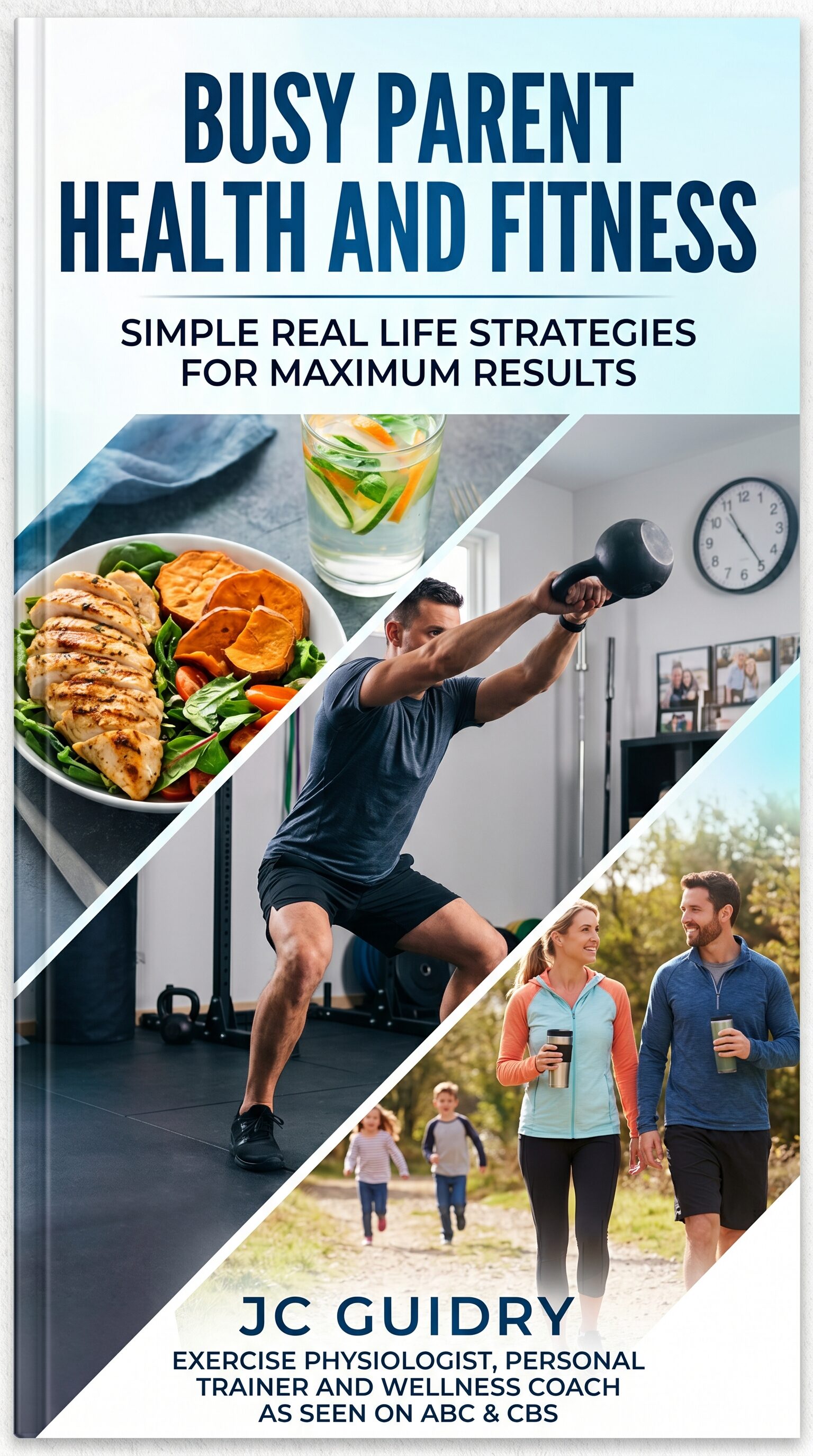
If you’re a Fulshear parent trying to balance fitness, nutrition, and the beautiful disaster that is family life, I wrote Busy Parent Health & Fitness specifically for you. It’s a no-fluff, real-life guide built around the fact that you have approximately 45 minutes and zero patience for complicated systems. Grab a copy if you haven’t yet — because knowing what to do matters a whole lot more when someone shows you how to do it in the time you actually have.
The Bottom Line
Your body is doing more than counting calories — it’s responding to the actual quality of what you feed it. That bag of “clean” chips might technically fit your macros, but your muscle tissue is keeping score in a way the nutrition label doesn’t show.
You put in the work at the gym. Make sure what you’re eating is working with you, not quietly against you. Your muscles — and your future self — will thank you.