









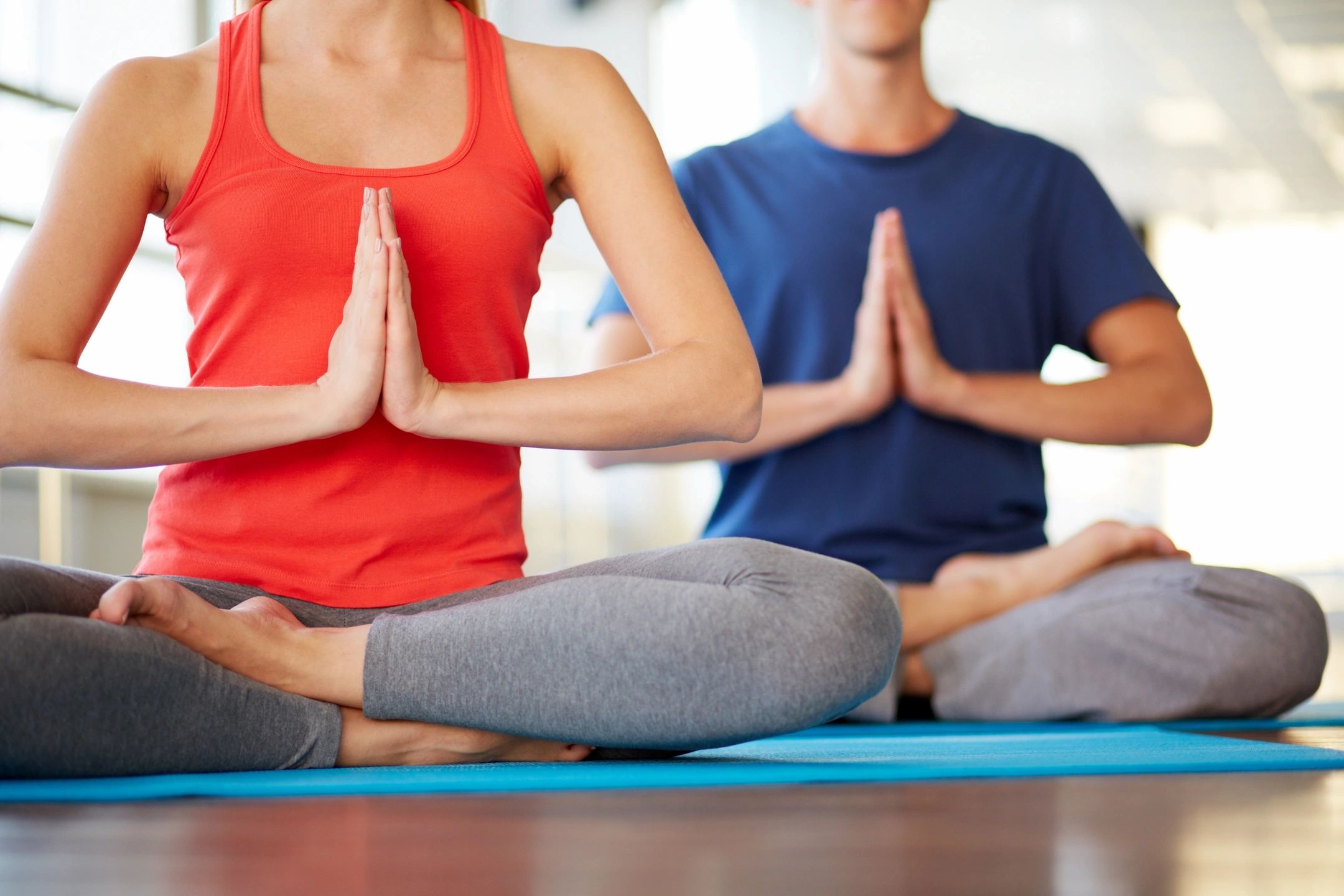
Most people don’t roll out a yoga mat because they’re thinking about their cholesterol. They roll it out because their lower back is staging a rebellion after three hours at a volleyball tournament, or because their neck sounds like a bowl of Rice Krispies every time they turn to check their blind spot in the school pickup line.
Nobody’s first thought is “ahh yes, time to optimize my triglycerides.” And yet, according to a fairly large pile of research, that might be exactly what’s happening while you’re just trying to touch your toes.
A recent analysis pulled together roughly 30 separate studies — nearly 2,700 adults, most carrying extra weight — and zeroed in specifically on people doing structured yoga programs versus people doing nothing, or doing some other kind of exercise instead. That’s the important part. This wasn’t “people who already like yoga filled out a survey.” These were actual controlled comparisons. The kind of research that makes a guy with an exercise physiology degree sit up a little straighter (ironically, probably not in a yoga pose).
So What Actually Happened In These Studies
Across the board, participants followed yoga programs that mixed poses, breathing work, and relaxation — nothing extreme, nothing requiring you to fold yourself into a human pretzel on day one. Researchers then tracked what happened to blood pressure, cholesterol, blood sugar regulation, and inflammation markers over the following weeks.
Here’s the part that surprised even the skeptics: blood pressure numbers moved. Not dramatically, but consistently — systolic pressure dropped by around 4 points on average, diastolic by a little over 2. Cholesterol shifted too, mostly on the “good” side of the ledger (HDL and triglycerides), while LDL was more of a mixed bag. Blood sugar control also improved, especially for people who started out in worse metabolic shape — which, if you think about it, is kind of the whole point. The people with the most room to improve saw the biggest payoff.
And the folks who saw the strongest results weren’t the ones who showed up once a month when guilt got the better of them. They were the ones doing roughly three sessions a week, about an hour each. In other words, yoga worked best when it was treated less like a spa day and more like an actual training habit — same rules that apply to literally every other form of exercise on the planet.
Why This Matters If You’re Juggling Kids, Work, and a Google Calendar Held Together By Duct Tape
If you’re a busy parent anywhere in Fulshear, Katy, or Sugar Land, you already know your schedule doesn’t have a lot of open real estate. Between drop-off at the elementary school, a full workday, dinner, homework supervision, and pretending you’re not exhausted by 8:30 PM, “go run five miles” can feel like a request from a different planet.
This is exactly why research like this matters. Yoga isn’t flashy. It won’t leave you drenched in sweat wondering if you made a poor life choice mid-workout (we’ve all been there). But it accumulates benefits quietly in the background — nervous system regulation, stress hormones calming down, gentle but consistent muscle engagement — and apparently that quiet accumulation adds up to real, measurable changes in the numbers your doctor actually cares about.
None of this means you should ditch your strength training or your walks around Cross Creek Ranch. It means yoga deserves a seat at the table alongside the rest of your routine, especially on the days when your body is asking for something gentler than another set of squats.
How To Actually Fit This Into Real Life
You don’t need a $40 yoga studio membership or a mat that matches your leggings to get in on this. A few practical ways to sneak it into an already-packed week:
- Two 20-minute sessions during the week, one longer one on the weekend. Consistency beats intensity here.
- Pair it with something you’re already doing. After the kids are in bed, before your shower, during the commercial breaks of whatever show you’re pretending to half-watch.
- Combine it with strength and walking, rather than replacing them. The research points to yoga as an addition, not a substitute.
- Use it as your “low battery” day workout — the one you do when you’re tired but still want to move.
This kind of layered approach — a little strength, a little walking, a little recovery-focused movement like yoga — is exactly the philosophy behind my Busy Parent Health & Fitness program. It’s built for people whose calendars look like a losing game of Tetris, with structured, realistic workouts you can actually finish before your coffee gets cold. If you’ve been meaning to get back into a routine but keep waiting for a mythical “less busy season” to arrive (spoiler: it doesn’t), that program is designed to meet you exactly where your schedule actually is.
Your blood pressure, apparently, would also appreciate it.