










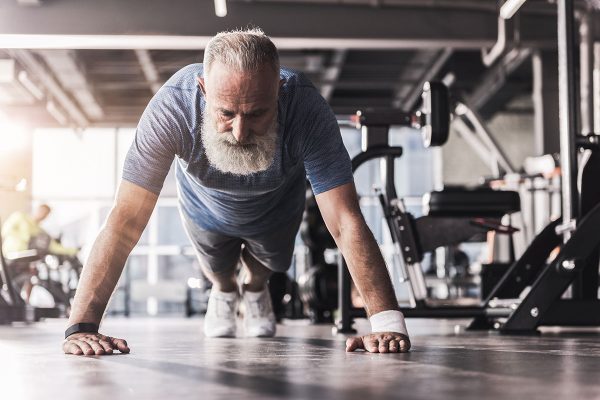
If you’ve been telling yourself that sore muscles and slow bounce-backs are just part of “getting older,” it might be time to rethink that narrative.
A new analysis is challenging everything we thought we knew about age and exercise recovery—and the findings are kind of awesome.
Researchers recently reviewed 36 studies comparing how younger adults (ages 18–25) and older adults (35 and up) recover from workouts. The result? Older folks are actually recovering better in some ways than their younger gym buddies.
Yep, you read that right.
Here’s what they found:
1. Less soreness? Yes, please.
Two days after a workout, older adults reported 34% less soreness than the younger group. And after three days? That number jumped to a whopping 62% less soreness. Basically, that “I can’t walk up the stairs” feeling after leg day might be more of a 20-something’s problem.
2. Muscles taking less damage
The study looked at creatine kinase (CK)—that’s an enzyme your muscles release when they’ve been worked hard. Twenty-four hours after exercise, CK levels were 28% lower in the older participants. Translation: less muscle damage, more bounce-back.
3. Muscle function stays solid
When researchers looked at how muscles actually performed after exercise, they found no big difference between the age groups. That means older adults aren’t lagging behind in recovery. In fact, they’re keeping up just fine—and in some ways, even excelling.
Why This Matters (Big Picture Style)
This study is like a big motivational high-five to anyone over 35 who’s ever doubted their ability to train hard, recover well, or build real strength.
It challenges the outdated belief that age equals decline. Instead, it shows that aging bodies might actually be better at handling the stress of exercise—thanks to things like accumulated training experience, muscle adaptation, or even the way older adults perceive pain.
So if you’re thinking about getting stronger, feeling better, and aging like fine wine (or at least like a very fit avocado), now’s a great time to jump in.
💥 Pro tip: This is exactly the kind of mindset shift we promote in our Virtual Online Coaching program at Method Evolution. Whether you’re new to fitness or getting back on track, we’re here to help you train smarter, recover faster, and feel amazing—no matter your age.
One Little Caveat
Most of the study participants were men, so there’s still more to learn—especially when it comes to women’s recovery patterns, hormone shifts, and long-term performance. Future research should absolutely dig deeper there.
Bottom Line: Age Ain’t the Limiter
You’re not too old to lift. You’re not too old to recover. You’re not too old to thrive.
Age is just a number—and based on this research, it’s one that might just be working in your favor.
So if you’re ready to stop tiptoeing around workouts and start making real gains, remember: recovery isn’t your enemy. It’s your secret weapon.
👉 And hey—if you want a personalized plan that fits your busy life and supports your fitness evolution, check out our Virtual Online Coaching at Method Evolution. We’ll help you make progress that sticks.